
Lumpkin County Criminal Court Cases
Lumpkin County criminal cases do not all sit in one docket. Superior Court and its clerk form the felony record center at the Lumpkin County Justice Center, 325 Riley Road, Room 108, Dahlonega, GA 30533. The clerk also serves Magistrate and Juvenile Courts. Filed pleadings, judgments, sentences, and public docket entries remain with that office. The counter is open Monday through Friday from 8:00 a.m. to 5:00 p.m., except holidays, and the main number is 706-864-3736.
Magistrate Court sits next door in Room 109. It handles warrant applications, first-stage proceedings, county ordinance matters, and certain misdemeanors. Its criminal line is 706-864-7760, and hours run from 8:00 a.m. to 4:30 p.m. Dahlonega Municipal Court separately holds city ordinance, traffic, and page-described misdemeanor matters. No local State Court was found in the verified Lumpkin County court map, so a searcher should not assume the usual Georgia State Court route exists here.
Lumpkin County Felony Files in Room 108
The elected clerk is the legal custodian, while the prosecutor and judges create many of the records that enter a Lumpkin County felony file. Room 108 is the right starting point for a filed accusation or indictment, a hearing entry, a plea, a judgment, or a sentence. It is not the right counter for an underlying incident report. That report remains with the arresting agency. This split explains why a Sheriff open-records request cannot produce the full court docket.
The manifest image below comes from the official Lumpkin County Clerk page.
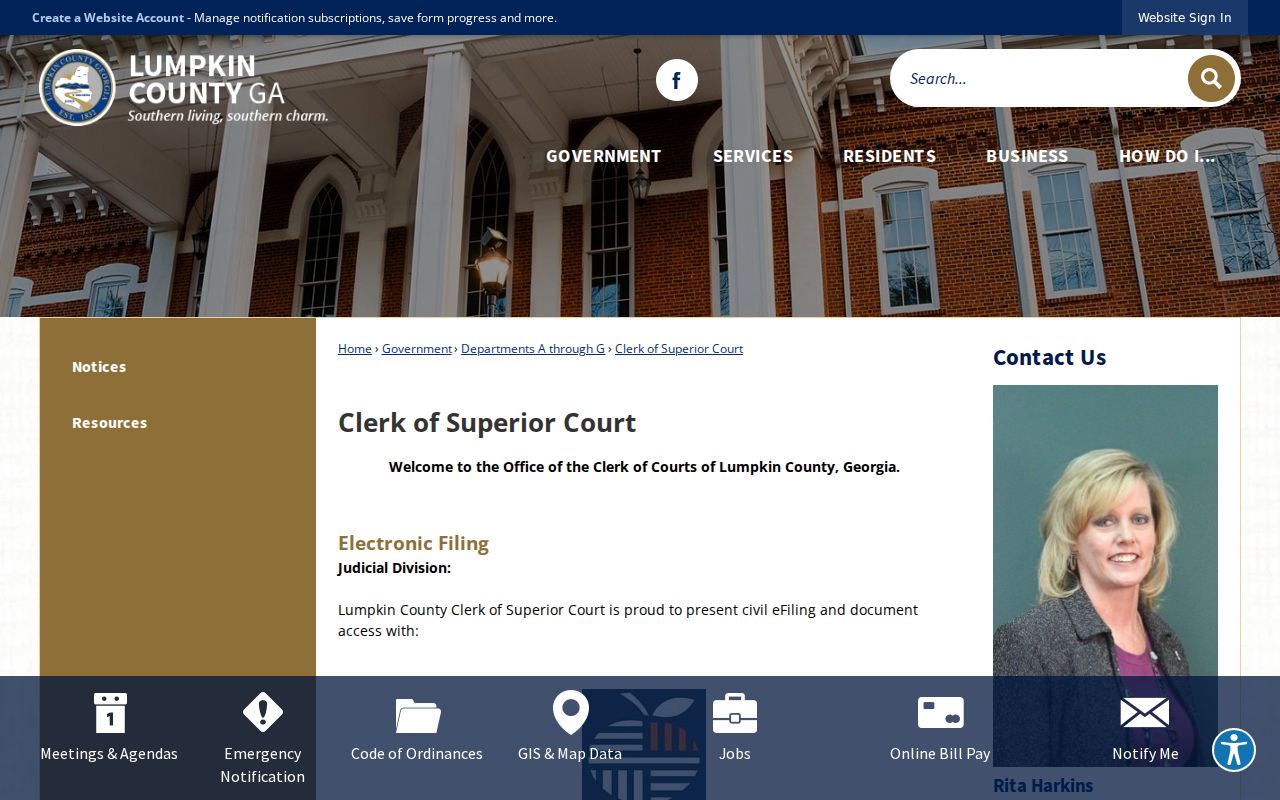
The clerk page confirms the current Justice Center contact and provides Lumpkin County’s link to electronic court access.
Superior Court Clerk
325 Riley Road, Room 108
Dahlonega, GA 30533
706-864-3736
Monday through Friday, 8:00 a.m. to 5:00 p.m.
Searching Lumpkin County Case Records
Lumpkin County does not advertise a free county defendant-search portal. The workable chain combines account-based access with the clerk’s counter and phone. Start with the court and a strong identifier, such as the case number. If the online channel does not show the file, ask the clerk whether it is older, unavailable online, confidential, sealed, or held by a different court.
- Decide whether the record belongs to Superior, Magistrate, or Dahlonega Municipal Court.
- Use the case number when known, or give the clerk the party name and an approximate filing date.
- Register with the county-linked PeachCourt service if remote document access fits the request.
- Read the docket in date order, separating filed charges from later pleas and final judgments.
- Call or visit Room 108 for missing entries, copies, certification questions, and older public files.
| Search detail | Use | Status | Notes |
|---|---|---|---|
| Court | Route the file | Essential | Superior, Magistrate, or Municipal |
| Case number | Exact file lookup | Best identifier | Ask the clerk if the format is unclear |
| Party name | Name search | Fallback | Similar names may need more detail |
| Filing year | Narrow results | Helpful | Use an approximate year if needed |
| Account | Provider access | Required online | PeachCourt and E-Access providers require registration |
PeachCourt and Lumpkin County Access
PeachCourt is the electronic channel linked by Lumpkin County. Criminal e-filing has been available since April 1, 2020, but that fact does not make PeachCourt a free statewide defendant database. Registration is required. Document access may differ by file, and the research did not verify a public fee schedule or full historical range. Treat a missing online record as a cue to contact the clerk, not proof that no case exists.
The official PeachCourt landing page shows the account-based service used for participating Georgia courts.
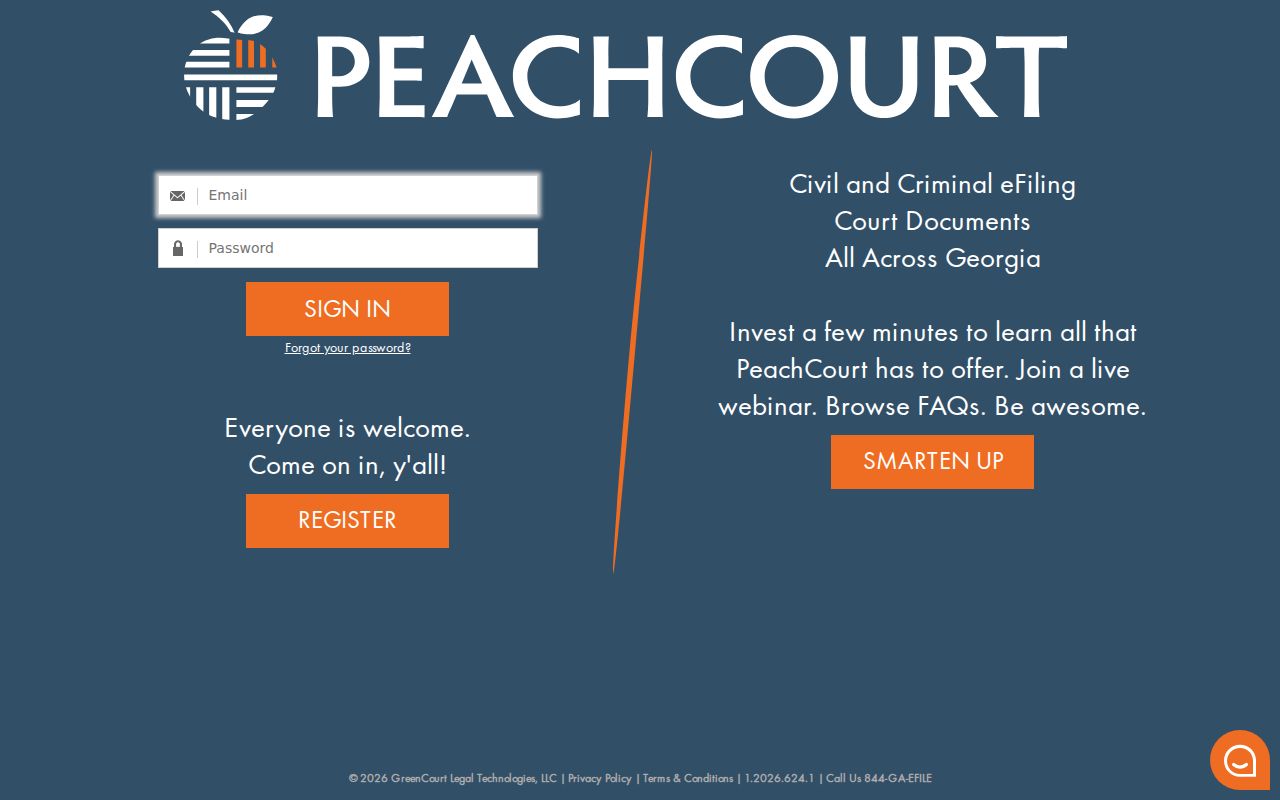
That account requirement is why Room 108 remains the reliable fallback for public Lumpkin County case records.
Georgia Courts E-Access is a provider directory, not a complete court search. Its official page is pictured below.
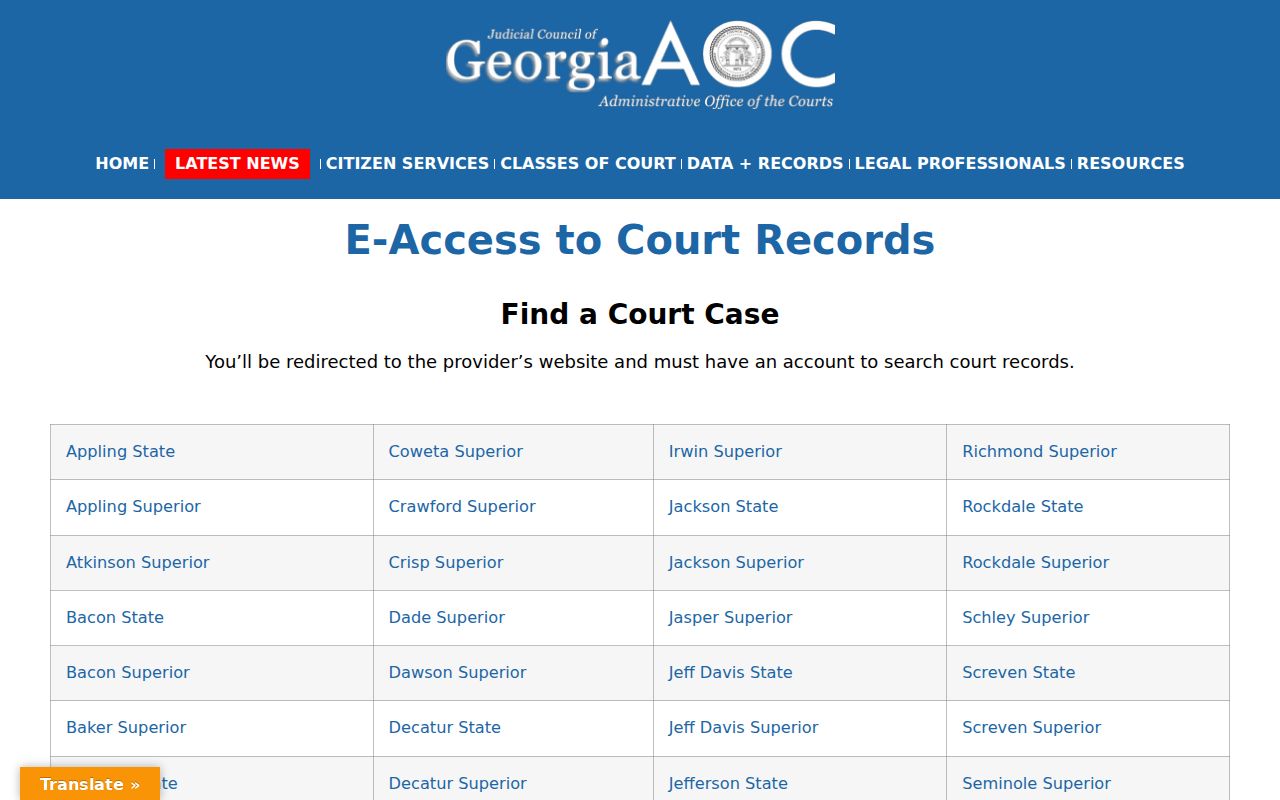
The directory can point to participating vendors, while the Lumpkin County clerk still controls the original local file.
Inside a Lumpkin County Case File
A public Lumpkin County criminal case file may contain the charging paper, dates, docket entries, motions, hearing notices, judgment, sentence, probation terms, and court costs. Availability depends on the actual file. The research did not open a private case or verify every local docket label, so the clerk should confirm document names and copy options. Most of all, distinguish the accusation or indictment from the final disposition. A filed charge states what the state alleges. The judgment records what the court ultimately decided.
| Case number and court | Identifies the exact court file and the office that holds it. |
|---|---|
| Charging document | Shows the accusation or indictment and the filed charge. |
| Docket entries | Lists procedural events, filings, and court activity by date. |
| Hearing notices | Records scheduled proceedings when part of the public file. |
| Disposition and judgment | Shows dismissal, plea, verdict, or another final result. |
| Sentence and conditions | May state confinement, probation, fines, or court-ordered terms. |
Note: A charge in a Lumpkin County docket is an allegation until a plea, verdict, dismissal, or other disposition resolves it.
Lumpkin County Warrant Records in Room 109
Room 109 is the local door for warrant applications and first-stage criminal proceedings. Those records can precede a Superior Court felony file. A reader asking only Room 108 about a very new warrant matter may therefore be at the wrong counter. Call the Magistrate criminal line first when the question concerns a warrant application, an initial proceeding, a good-behavior bond, a county ordinance, or a matter assigned to that court.
The official Magistrate Court page is the source for its criminal role and contact information.
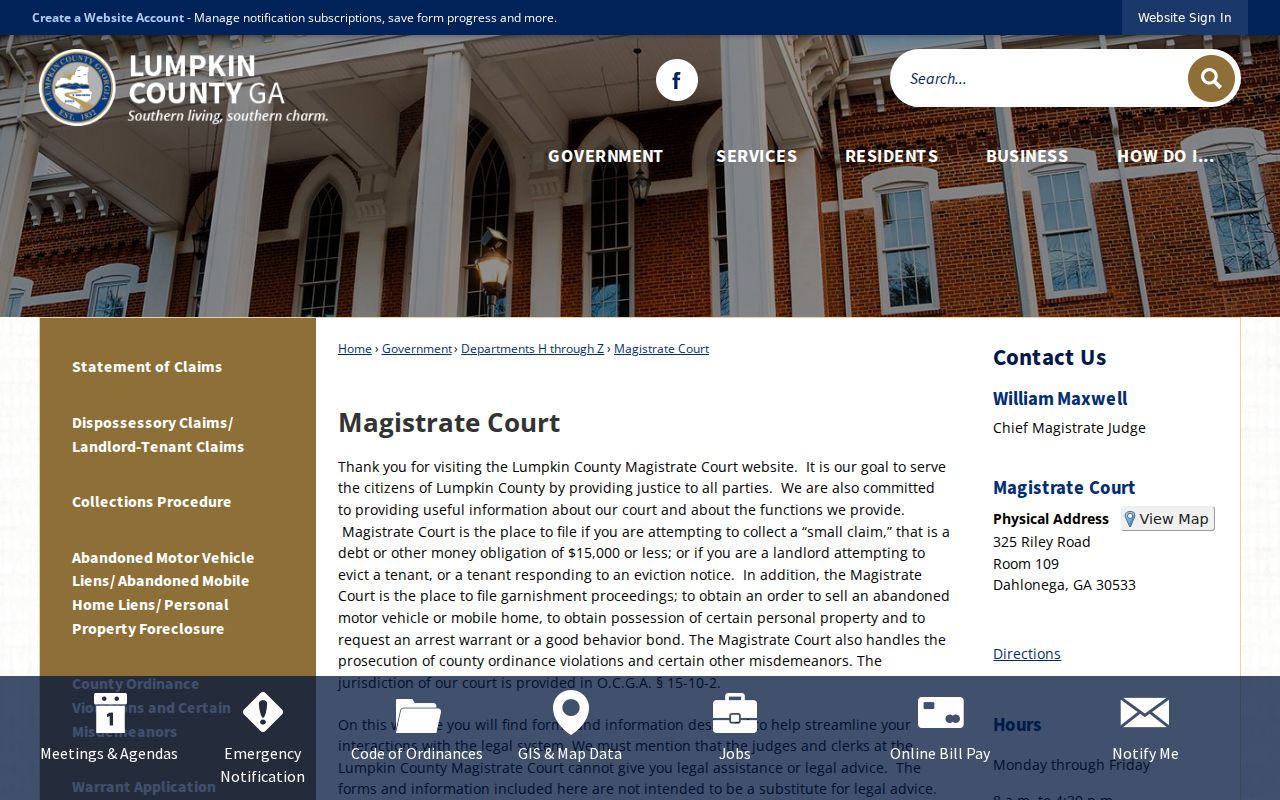
Its location beside the clerk makes the distinction easy to miss, but the two rooms answer different record questions.
How a Criminal Case Moves
The arresting agency first creates its report, but a prosecutor determines which charge to file. That filed charge may differ from the arrest label. Arraignment places the accusation before the accused person and allows a plea. Motions and hearings then shape what evidence or issues reach trial. A plea or trial can produce a judgment, followed by sentencing when there is a conviction. Each step may create a new entry or document in the clerk’s file.
Case flow: Charges Filed › Arraignment › Pretrial › Plea or Trial › Disposition › Sentencing
Lumpkin County’s 2026 staffing description assigns a criminal disposition transmittal clerk to send fingerprintable-offense results electronically to GCIC and DDS. This link matters when a court result is absent from a state history. The correction begins with the court that owns the judgment so that the proper disposition can be retransmitted.
Lumpkin County Filed Charges and the DA
The Enotah Judicial Circuit District Attorney occupies Justice Center Room 226. The office handles prosecution, while the clerk preserves the court file. Questions about why a charge was filed belong with the prosecution side, but requests for copies of docket papers belong with the clerk. Underlying reports still remain with the investigating agency. Keeping those roles apart prevents a request from circling among offices.
The official Lumpkin County District Attorney page identifies the office and its Justice Center location.
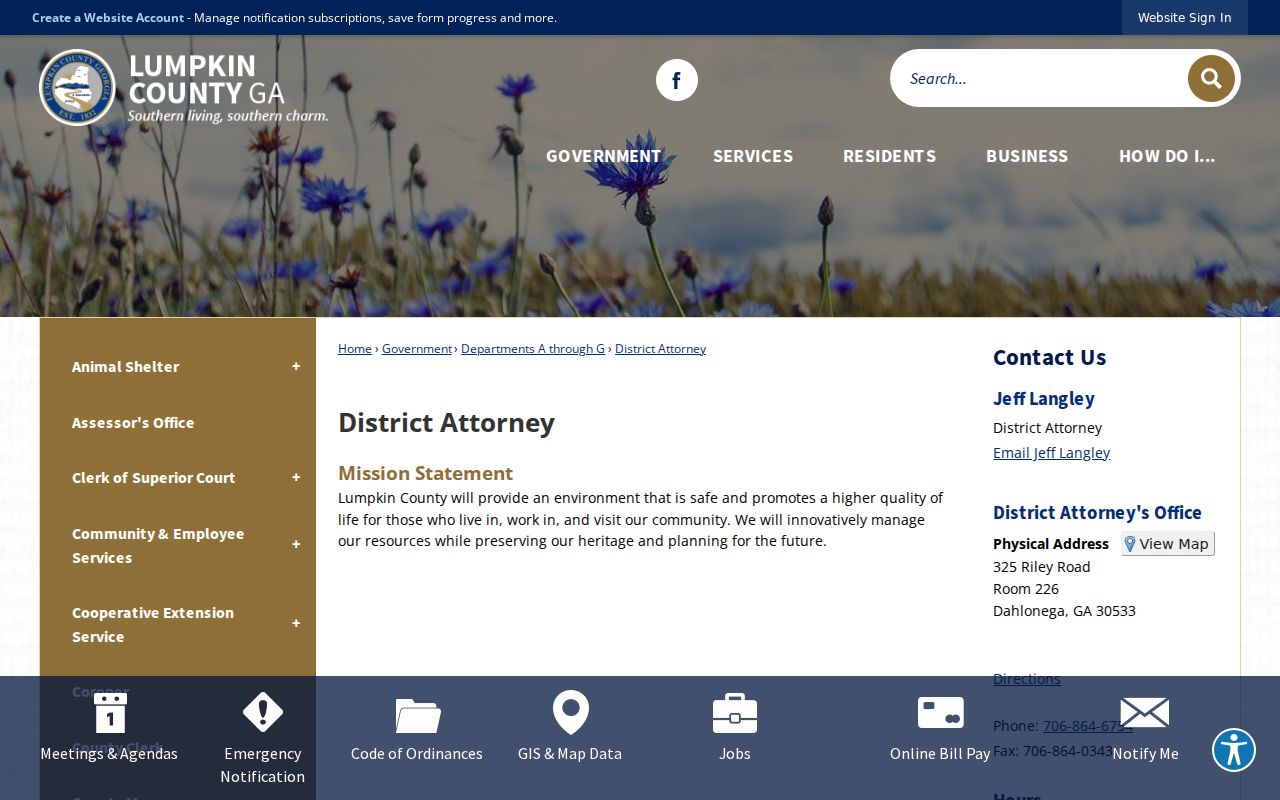
The office is open Monday through Friday from 8:30 a.m. to 5:00 p.m. and lists 706-864-6754.
The Enotah Circuit Public Defender page gives the separate defense-office channel.
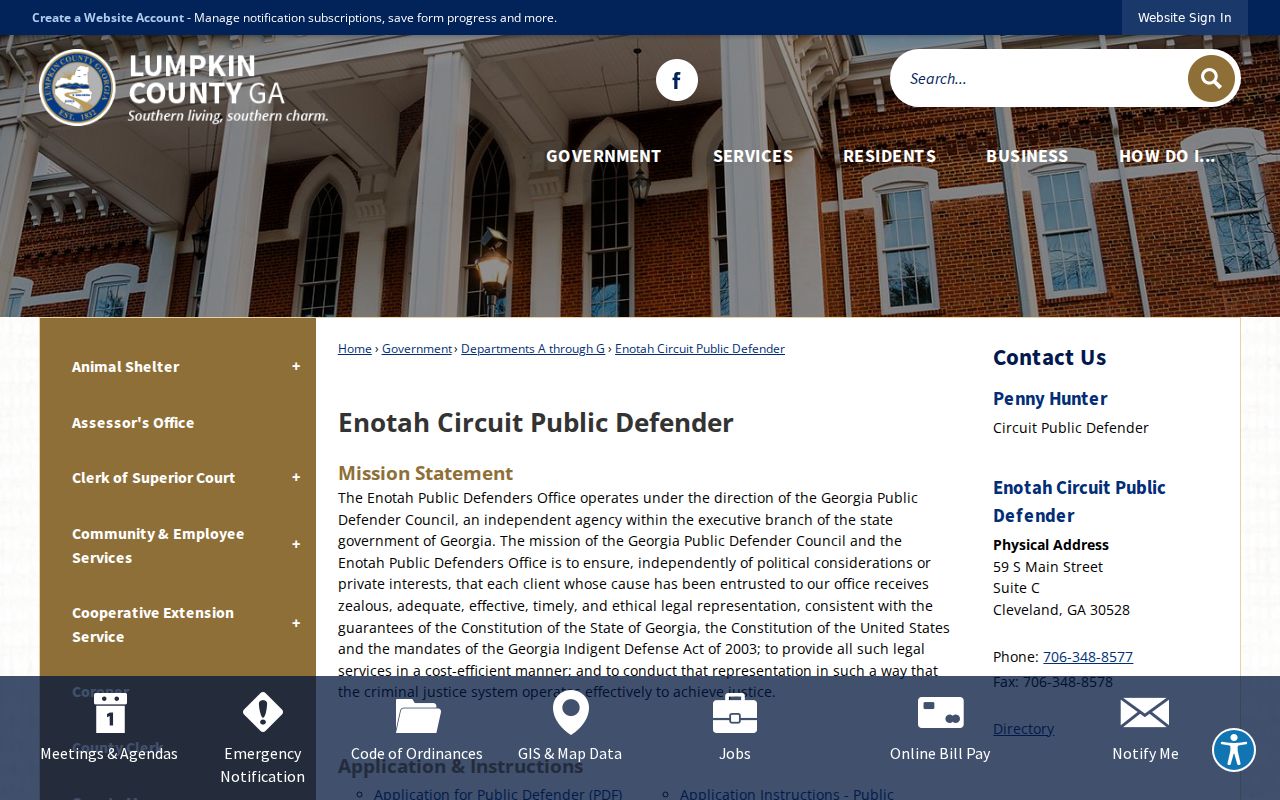
That office is at 59 S Main Street, Suite C, Cleveland, Georgia, and provides official application instructions.
When Lumpkin County Court Records Disagree
A jail record, a court file, and Georgia Felon Search answer different questions. Booking data shows custody at a point in time. The Lumpkin County court file shows the filed charge and what happened in court. Georgia Felon Search is limited to public Georgia felony-conviction information and can omit misdemeanors, juvenile history, and restricted or sealed material. Timing and missing disposition transmission can also create gaps.
When a state result conflicts with the court file, use the certified judgment or disposition from the clerk as the local source. Ask whether the disposition was sent to GCIC for the correct fingerprintable offense. A name-based state result cannot establish exact identity as well as fingerprints. For broader context on an arrest before filing, the county’s arrest lookup channels explain the separate agency and booking records.
Case Record Access & Restrictions
The Georgia Open Records Act supports access to existing public agency records, but it does not turn every court file into an unrestricted online record. Juvenile matters are not ordinary public criminal files. Sealed cases, protected victim information, and sensitive identifiers may also be withheld or redacted under the governing rule. An agency need not create a new summary or compilation. If a public record is not produced within three business days, the official framework calls for a written timetable and estimated cost when applicable.
Ask the Lumpkin County clerk about a missing file before drawing a conclusion. State the case number, court, party name, and approximate year. If the record was restricted, remember that Georgia record restriction limits public dissemination but does not automatically rewrite every separate court page. Court sealing can require its own legal step. The clerk can explain the status of the court record, though staff cannot give legal advice.