
Checking Lumpkin County Criminal History
A useful Lumpkin County criminal record check begins by defining the slice needed. Current custody belongs in the official Sheriff roster. The underlying arrest or incident narrative comes from the arresting agency. A filed felony case belongs with the Clerk of Superior Court, while Magistrate Court handles warrant applications and early proceedings. Georgia Felon Search answers only a narrower statewide felony-conviction question. None is a substitute for the others.
Use a full legal name, date of birth, spelling variants, and a case or incident date when known. Then follow the record to its source:
- Search the official county custody interface for a recent booking or release.
- Request the arresting agency's report with the date, place, role, and case number.
- Ask the correct court clerk for the filed charge, docket events, judgment, and sentence.
- Use Georgia Felon Search only for its public felony-conviction scope.
- Use fingerprints and GCIC procedures to review or correct your own fuller Georgia history.
Routing Lumpkin County Criminal Records
Lumpkin County uses three main public-record routes. The general County Clerk does not hold Sheriff records or court files. That distinction saves time because an open-record request sent to the wrong custodian cannot produce a record held elsewhere.
| Record | Correct channel | Useful detail |
|---|---|---|
| Arrest, incident, 911, warrant, inmate | LCSO open-record form | Case number, date, location, subject role |
| Filed criminal case or disposition | Clerk of Superior Court | Defendant name and court case number |
| Other county administrative record | County open-record route | Subject, date range, and cost limit |
The Sheriff route expressly covers local histories, dispositions, police records, audiovisual material, TPOs, and warrant information. A county administrative request cannot pull those records merely because the event occurred in Lumpkin County.
Clerk of Superior Court
325 Riley Road, Room 108
Dahlonega, GA 30533
706-864-3736
Monday-Friday, 8:00 a.m.-5:00 p.m.
Magistrate Court
325 Riley Road, Room 109
Dahlonega, GA 30533
706-864-7760
Monday-Friday, 8:00 a.m.-4:30 p.m.
Sheriff Records
385 E Main Street
Dahlonega, GA 30533
706-482-2634
Monday-Friday, 8:00 a.m.-5:00 p.m.
Room 108 is the practical stop for a filed felony case. Room 109 is the nearby counter for Magistrate criminal and warrant-application questions. Sheriff headquarters is a separate building. A visitor should not rely on Dahlonega's historic courthouse square as the current records destination.
The county's routing page shows this split clearly. View the official Lumpkin County request directions before choosing a custodian.
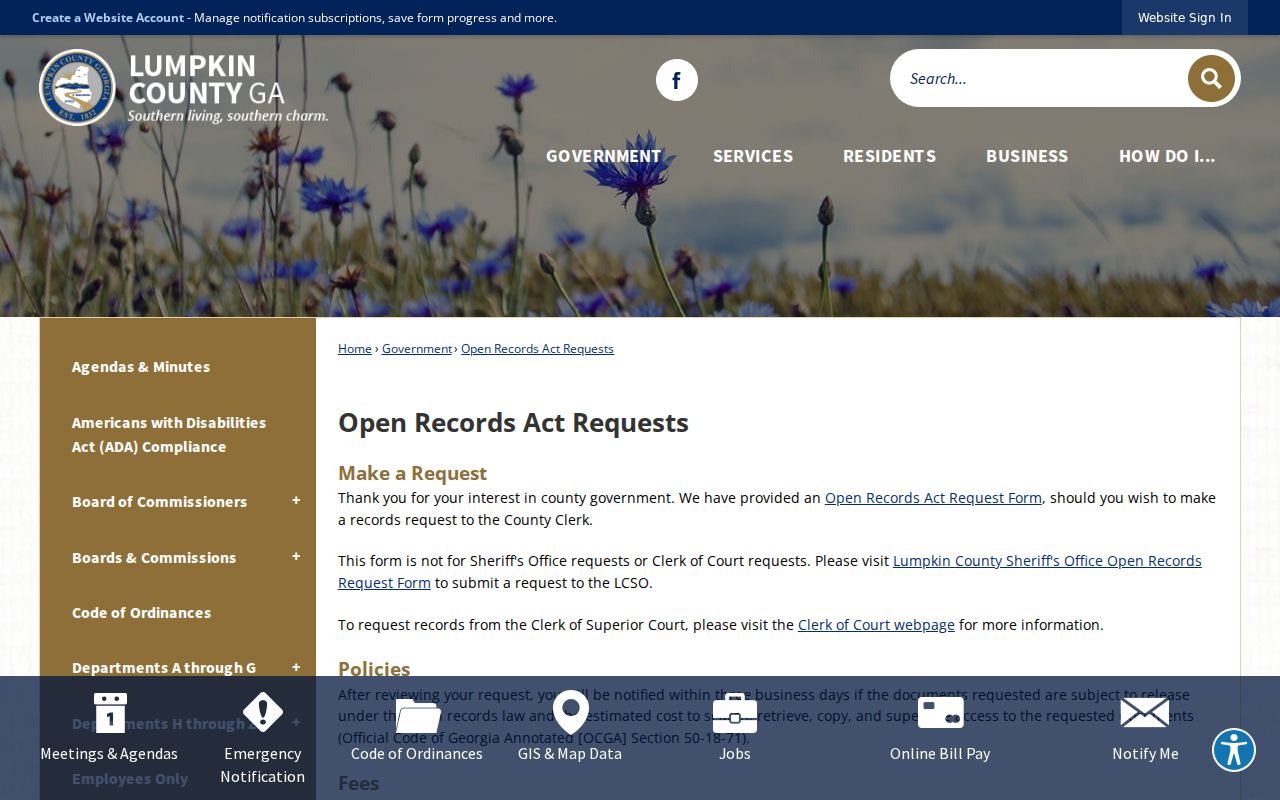
The captured page reinforces that Sheriff, court, and general county records follow separate paths.
Georgia Official Background Checks
Official Georgia products answer different questions. LCSO offers a notarized local criminal-history request. It costs $10 in exact cash for a person who proves Lumpkin residency, employment, or current school enrollment, and $25 for others. No checks are accepted. The authorized recipient must show valid identification at pickup, and uncollected results are destroyed after 30 days.
Georgia Felon Search is a public name check for Georgia felony convictions, not a full rap sheet. Reviewing one's own broader state record calls for GCIC inspection or fingerprint procedures. A statutory fingerprint check uses GAPS only when an authorized agency supplies the required ORI, reason, and service code.
Choose the product by purpose, not by which form appears first in search results. A Lumpkin County local history is tied to the Sheriff's consent and pickup rules. The state felony service can return possible name matches but cannot settle identity without prints. GCIC inspection is the stronger path when a person wants to see whether their own Georgia record contains the wrong charge, an unmatched outcome, or another data problem. An FBI Identity History Summary is a separate federal self-review product and does not replace the local court file.
| Product | Price in research | Scope |
|---|---|---|
| LCSO local history | $10 qualifying local; $25 others | Local request with notarized consent |
| Georgia Felon Search | $15 search; $15 per match opened | Georgia felony convictions only |
| GCIC self-inspection | $10 with cards; $25 with HQ printing | Personal review and correction route |
Lumpkin County Felony Search Limits
Georgia Felon Search requires payment even when it returns no record. A possible match is still not fingerprint identification. The service omits misdemeanors, juvenile felony history, and sealed or restricted information, so a no-result screen does not prove that no arrest, court case, or other justice contact exists.
| Field | Control | Use |
|---|---|---|
| First and last name | Text | Required |
| Date of birth | Date | Required |
| Sex | Choice | Required by Georgia.gov |
| Race | Choice | GBI guidance says supplied; verify live form |
| Search and payment | Card transaction | $15 initial search |
The live Georgia Felon Search interface shows the current transaction route.
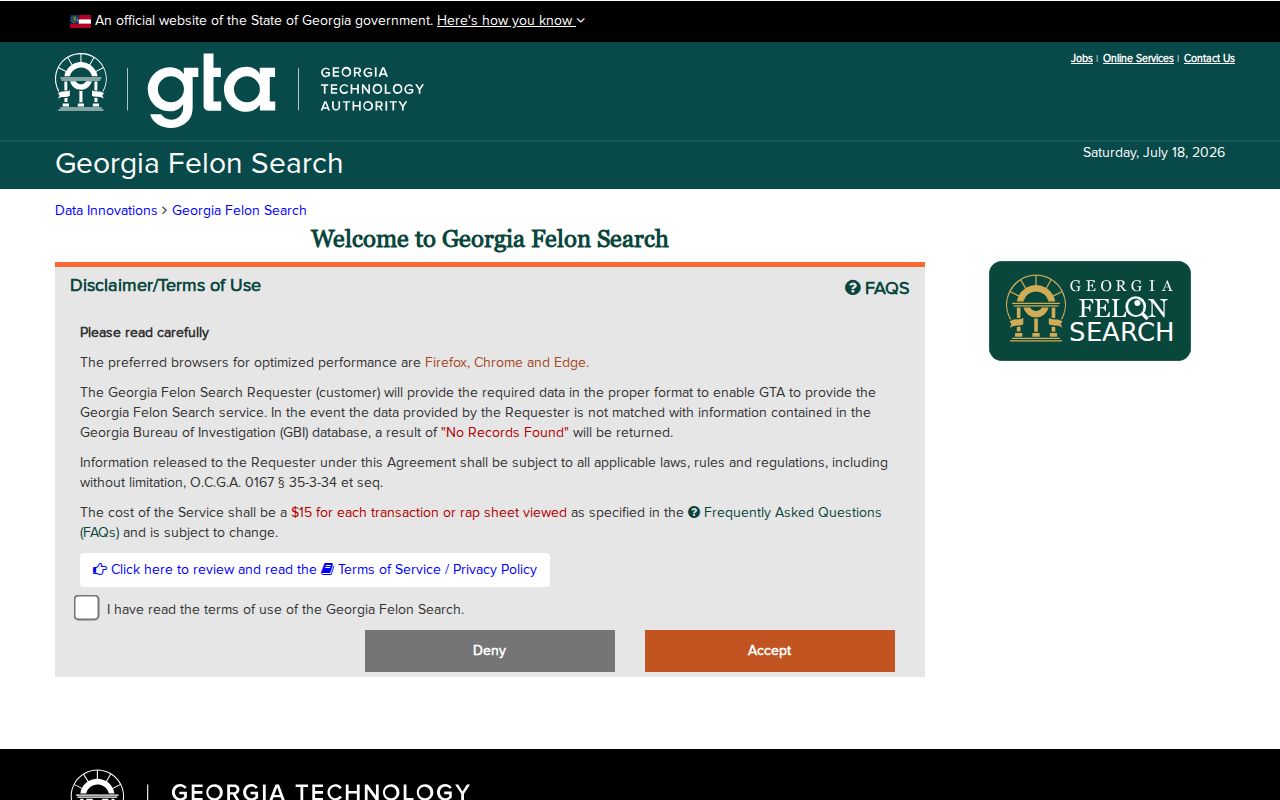
This screen is best read as a limited possible-match tool, not proof of identity or a complete Lumpkin County criminal history.
Criminal Record Types
A criminal event can create several records at once. Each has its own custodian, timing, and public-access rules. Comparing them prevents a booking charge from being mistaken for the final result.
- Arrest report
- The arresting agency's account of facts and probable cause known at that time.
- Booking record
- The detention entry for intake, custody, identifying details, and release status.
- Court file
- The clerk-held docket, filings, hearings, judgment, sentence, and disposition.
- GCIC history
- Fingerprint-linked Georgia arrest cycles, submitted outcomes, and correctional custody.
- Registry record
- Public statutory information maintained locally and centralized by GBI.
Warrant records and state-prison records form still more distinct products. For deeper case detail, use the Lumpkin County criminal court cases route.
Lumpkin County Sheriff's Record Role
Sheriff Stacy M. Jarrard joined LCSO in 1988, won election in 2008, and took office in 2009. The official Sheriff biography says the office became the 14th of Georgia's 159 sheriff offices to achieve State Certification in July 2010. That milestone describes agency standards, not the outcome of any person’s record search.
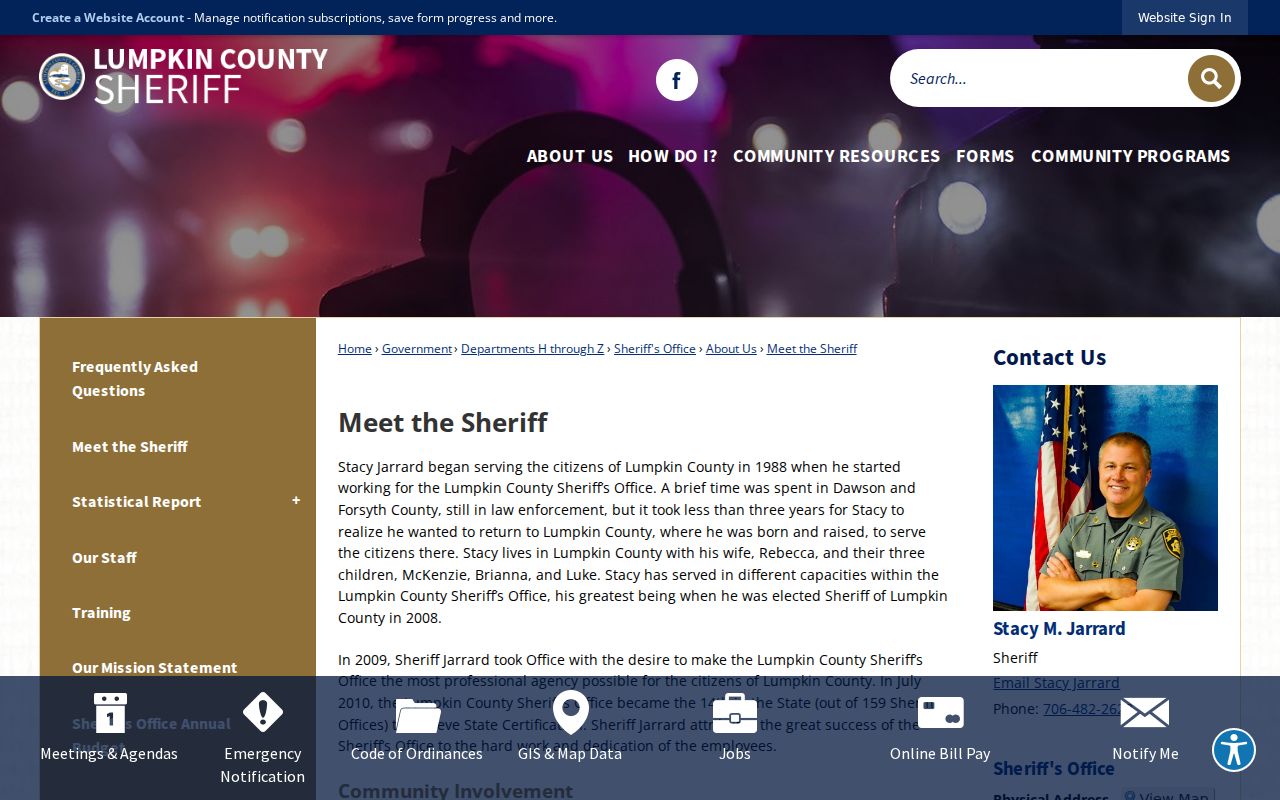
The biography also describes jail education and housing people for other agencies, useful context for interpreting a roster's held-for-agency field.
The Lumpkin County Sheriff's Office hub connects readers to forms, jail information, and public services.
For records, the web form, lobby, and direct phone lines remain the verified channels. No official Sheriff mobile app was identified in the research.
Inside a Lumpkin County Criminal Record
Georgia criminal-history information may contain identity data, arresting agency, arrest date, charges, a submitted court disposition, and correctional custody. Public products reveal less. The local roster may show a photo or placeholder, name, race, sex, age or birth-date configuration, cell block, arrest date, holding agency, and release date.
| Name and identifiers | Identity fields used to distinguish people with similar names. |
|---|---|
| Arrest and booking | Agency, date, intake, custody, and release context. |
| Charges | Allegations may change between arrest, filing, and disposition. |
| Disposition | The court's recorded result, transmitted for fingerprintable offenses. |
| Sentence | Court-ordered custody, probation, fines, or other terms when public. |
| Supervision | State custody or community supervision may require separate systems. |
A missing outcome should first be checked with the court that entered it. The clerk can correct the source and retransmit a disposition to GCIC when appropriate.
The record chain explains why dates and labels can differ. Detention records the arrest charge during intake. A prosecutor may later file a different accusation or indictment. The court then enters the judgment and final disposition. Lumpkin County's clerk staffing materials specifically include electronic GCIC and driver-services transmission for each fingerprintable offense. If the state history lacks that final event, bring the court case number and a certified disposition to the source office rather than assuming the arrest entry was sealed.
Lumpkin County Jail or State Custody
The county's Zuercher interface covers current county custody and recent releases. The Georgia Department of Corrections Find an Offender system covers sentenced state custody. If a county roster search misses, call detention at 706-864-0412 because release, transfer, spelling, processing delay, or movement to state prison may explain the gap.
DCS handles felony probation and parole supervision in the community, while the Parole Board makes parole decisions. The DCS Dahlonega Field Office page identifies the office serving Lumpkin County.
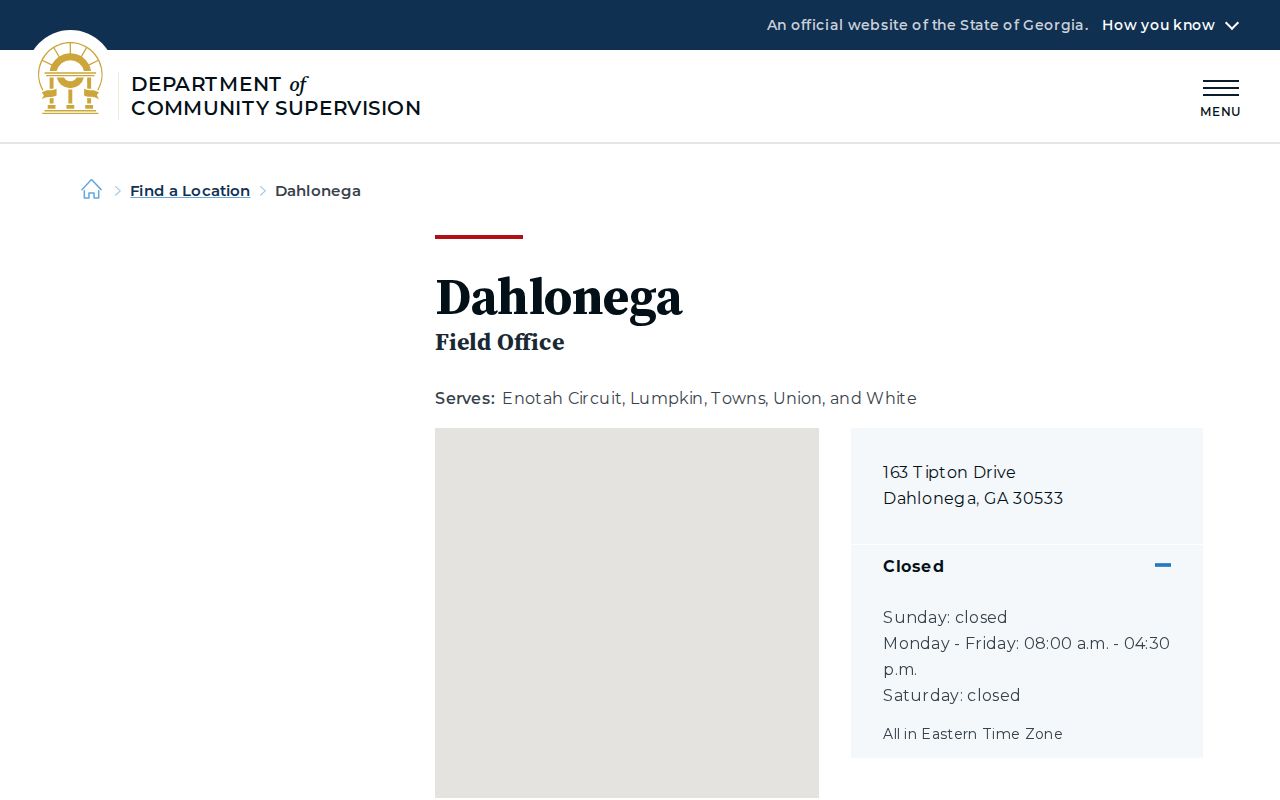
Its role is supervision, so verify a sentence in the court judgment and custody through the appropriate jail or corrections locator.
The Georgia Parole Board links its TPM lookup and parolee database.
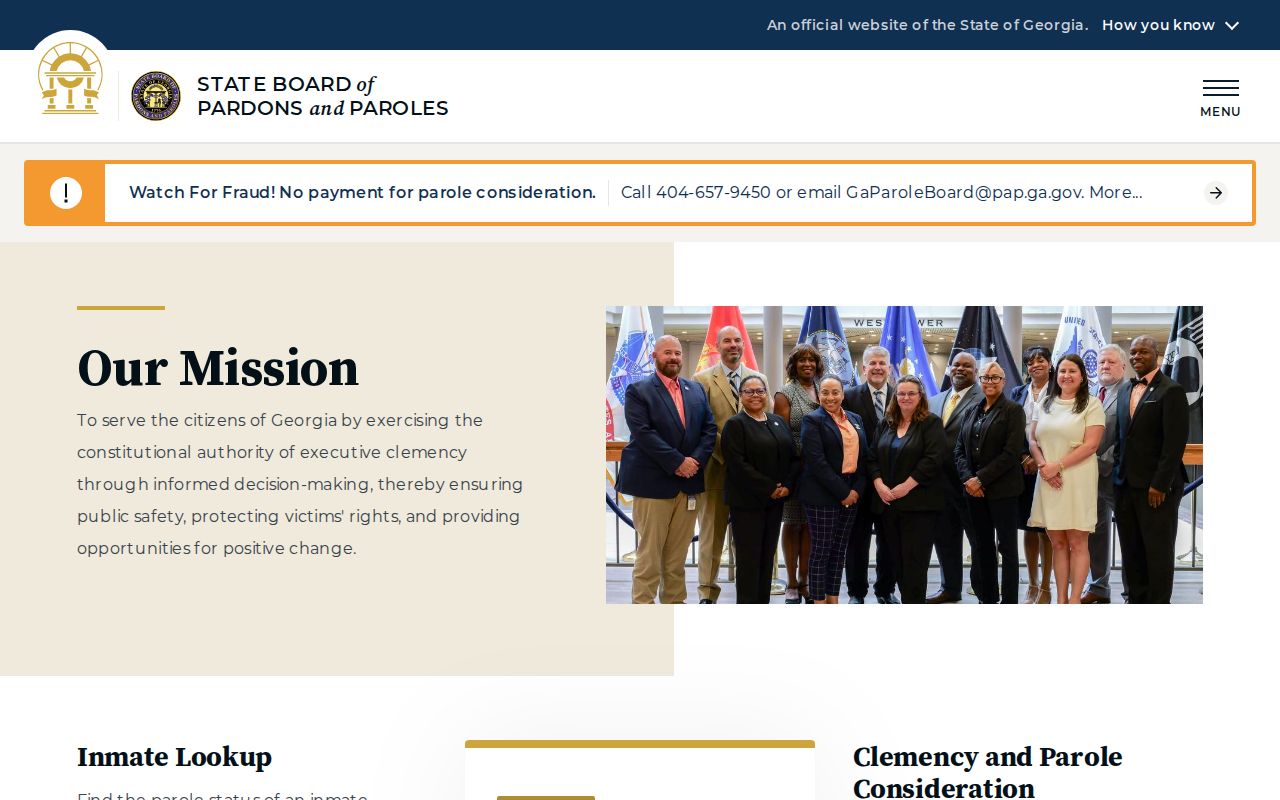
Parole eligibility does not guarantee release; a Board decision and the court sentence remain distinct records.
Public Access Laws in Georgia
The Georgia Open Records Act governs existing agency records. Lumpkin County generally must respond within three business days, either producing responsive public material or giving a timetable and estimated cost. The first 15 minutes of qualifying labor are free. An office need not create a new report, and protected portions may be redacted.
Key statutes:
O.C.G.A. §50-18-71 sets request timing and production rules.
O.C.G.A. §50-18-72 covers exemptions and requires specific authority for withholding.
O.C.G.A. §35-3-34 governs dissemination, including the public felony-conviction route.
O.C.G.A. §35-3-37 defines record restriction and its access effects.
O.C.G.A. §42-1-12 governs Georgia's public sex offender registry.
These rules do not make every GCIC field public. Juvenile files, sealed matters, and protected victim information receive separate treatment.
Lumpkin County Warrant Status
No clearly enabled official Lumpkin County active-warrant name search was found. The verified chain is the Sheriff open-record form, the Sheriff main line at 706-864-0414, the Magistrate criminal desk at 706-864-7760, and direct confirmation with the relevant court clerk. Zuercher software capability alone does not prove that Lumpkin enabled a warrant module.
Magistrate warrant applications are not the same as an active-warrant lookup. Bench warrants can also arise after a failure to appear, including in Dahlonega Municipal Court. Sealed and juvenile warrants are not public. Direct confirmation is safer than relying on an old web entry when a person needs to resolve their own status.
Note: The Sheriff's anonymous tip line is 706-482-2699, but it is not a substitute for court confirmation or legal advice.
Sealed, Expunged, and Restricted Records
Georgia calls its main process record restriction. It limits public dissemination but does not destroy the record. Common qualifying outcomes may include dismissal, nolle prosequi, a dead docket, or no further action. First correct any missing disposition with the court because an incomplete history and an eligible restriction are different problems.
For an arrest before July 1, 2013, the applicant begins with the arresting agency; one form covers one arrest date. Later arrests start with the prosecutor. A denial may be appealed in Superior Court within 30 days. GCIC's posted processing charge is $25 where applicant submission is required, and official guidance says a complete request commonly takes two to three weeks.
The Georgia record restriction instructions lay out the date split and agency sequence.
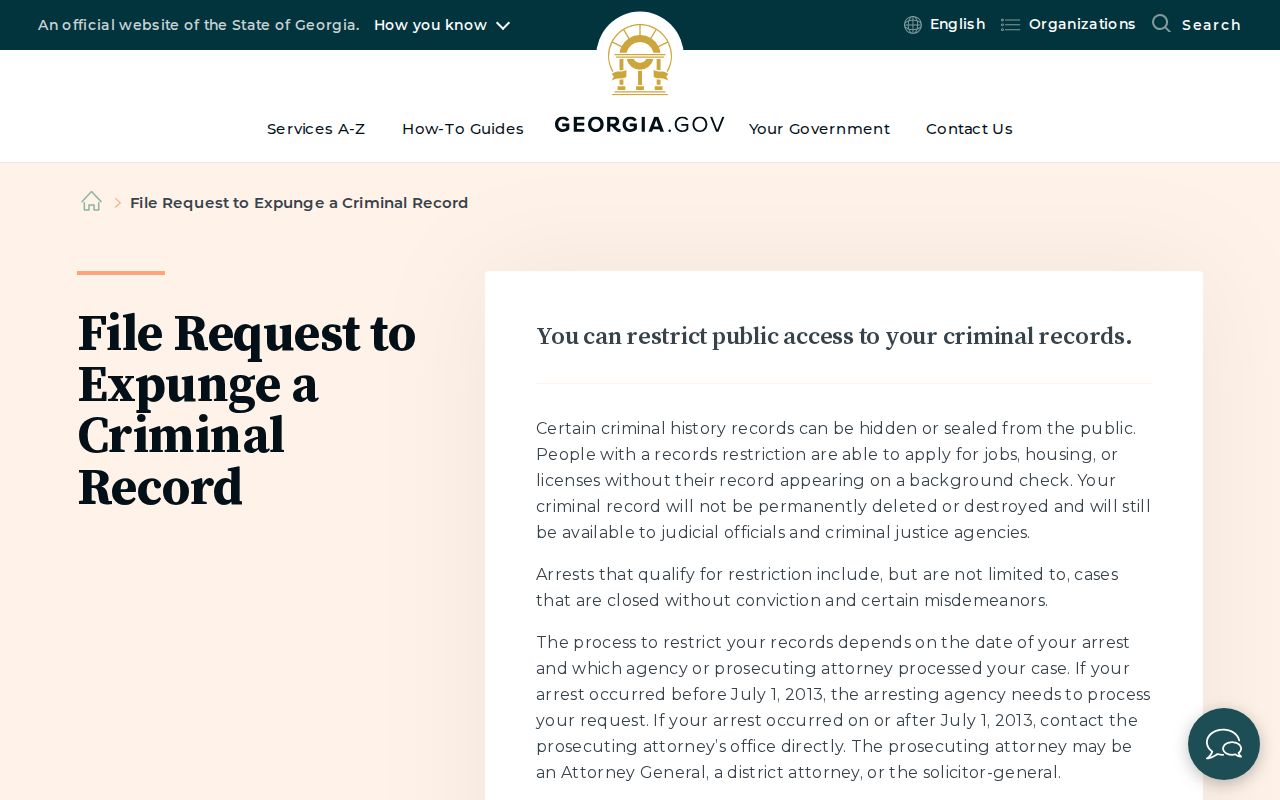
The official workflow also distinguishes restriction from court-record sealing, First Offender relief, pardons, and narrow victim-relief paths.
Lumpkin County Criminal Record Context
LCSO counted 26,165 calls for service in 2024, up 6.9 percent from 2023. The total included 4,670 traffic stops, 1,011 crashes, 988 suspicious-person or vehicle calls, 507 warrant calls, 428 domestic problems, and 176 theft calls. These are workload counts. They are not conviction totals, and they do not show that each call led to an arrest or filed case.
The difference matters when reading Lumpkin County criminal records. A dispatch event may end without a report. An arrest may not become a filed charge. A filed charge may end in dismissal or acquittal. The court disposition, not an activity statistic, answers the outcome question.
Lumpkin County's mountain setting also shapes agency workload without changing the meaning of a record. The county covers about 283 square miles, and county material says 44 percent lies in Chattahoochee National Forest. Tourism, commuting, and the university add movement through Dahlonega. Those facts can help explain shifts in calls and patrol activity, but they cannot establish guilt, charge severity, or an individual's criminal history.
Lumpkin County Fingerprint Record Checks
GAPS is Georgia's authorized fingerprint channel, operated through IDEMIA/IdentoGO. An authorized agency provides the ORI, reason, and service code. The applicant registers, presents accepted identification, and is fingerprinted. GBI says results generally return to the authorized agency in 24 to 48 hours.
The GBI GAPS page explains registration and support contacts.
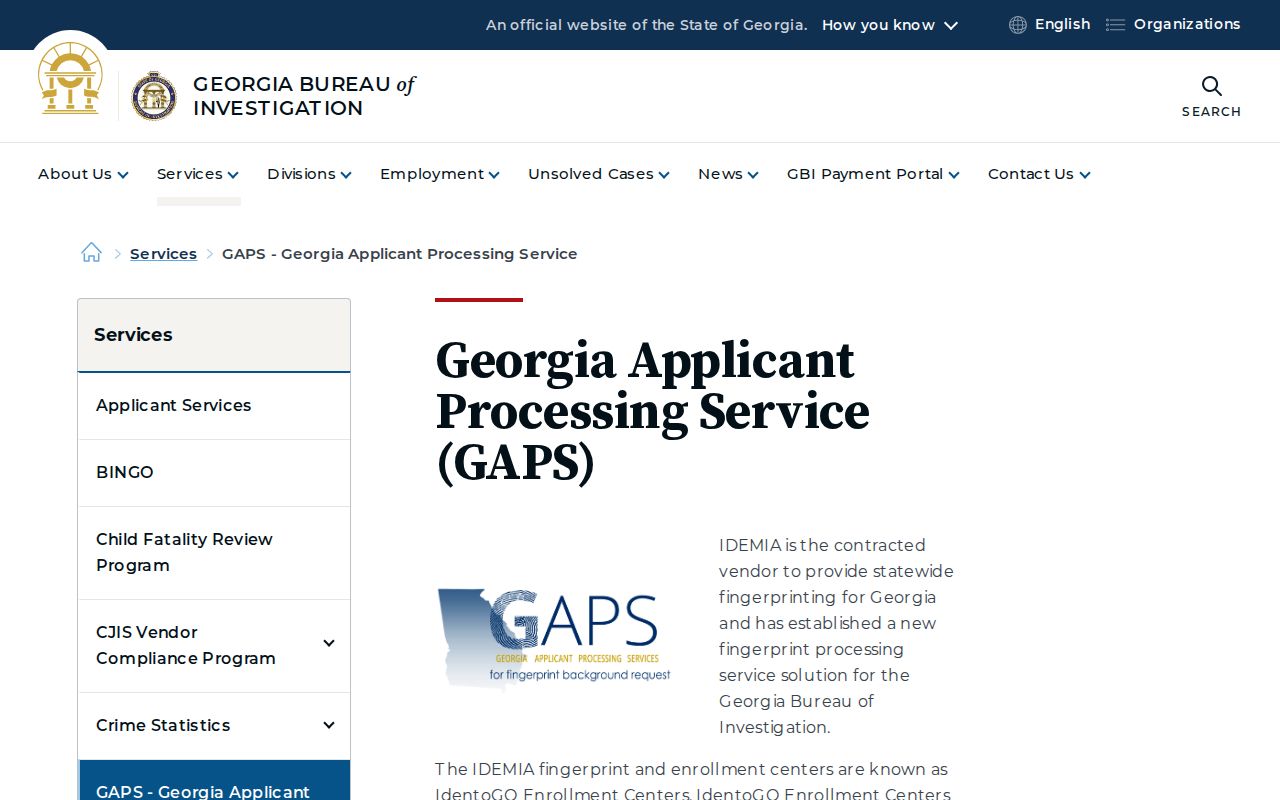
This process is not a public curiosity search. For personal accuracy review, use GCIC's own inspection and correction instructions.
Lumpkin County Criminal Records by City
Dahlonega is Lumpkin County's only incorporated municipality. City police create their own reports, and Municipal Court keeps city traffic, ordinance, and assigned misdemeanor matters. County jail, Sheriff, Superior Court, and state records still follow their own channels, so the city boundary does not collapse them into one database.
Dahlonega Criminal Records
7,537 residents in the 2020 Census. City police and Municipal Court add local report and citation routes.
The city page helps distinguish a police report at City Hall from a county court case at the Justice Center and a booking at county detention.