
Sex Offender Checks in Lumpkin County
The Georgia Sex Offender Registry is the primary public channel for a Lumpkin County sex offender search. The Georgia Bureau of Investigation and its Georgia Crime Information Center host the statewide system. Lumpkin County Sheriff's Office supplies and verifies local registration data under O.C.G.A. §42-1-12. This split matters. GBI runs the public platform, but local questions about a Lumpkin County address, required report, or suspected violation belong with the sheriff.
Use the registry as a current safety record, not as a substitute for a court file or fingerprint-based history. Entries can change daily. A profile may reflect a registered home, work, or school address and the offense that triggered registration, yet it does not recreate every event in the underlying criminal case. For court pleadings and disposition detail, use the clerk channel described in the Lumpkin County criminal court cases resource.
Lumpkin Registry Roles Split
Georgia law divides responsibility between the sheriff and GBI. A person who must register reports to the sheriff in the county of residence. The local office collects required facts, verifies information, and sends registry data to the state system. GBI maintains the searchable database and publishes the information it receives. A state profile is therefore the public-facing record, while Lumpkin County performs the local intake and compliance work.
This division also explains where to ask for help. Questions about navigating the public search or what a field means can start with GBI. A concern about an unreported Lumpkin County move, a missed local report, or possible noncompliance should go to the Lumpkin County Sheriff's Office. Do not confront the person named in a profile.
How to Search the Georgia Sex Offender Registry
Start at the official registry landing page and read its conditions of use. The interface supports a person or location-based inquiry, though exact interactive controls can change. GBI warns that the registry is based on data submitted by responsible agencies and does not guarantee that every item is complete at every moment.
- Open the Georgia Sex Offender Registry and accept the site's conditions.
- Enter the known name or use available location criteria for Lumpkin County.
- Compare the result list with the known name, photograph, address, and physical details.
- Open the full record and review the offense, status, and verification information.
| Search approach | Input | Required | Use |
|---|---|---|---|
| Name search | First and last name | Search dependent | Find a known person and compare identifiers |
| Place search | County, city, ZIP, or address controls shown | Search dependent | Review records tied to a Lumpkin County area |
| Profile review | Result selection | Yes | Open the public registration details |
The official GBI registry page shown here leads to the public search.
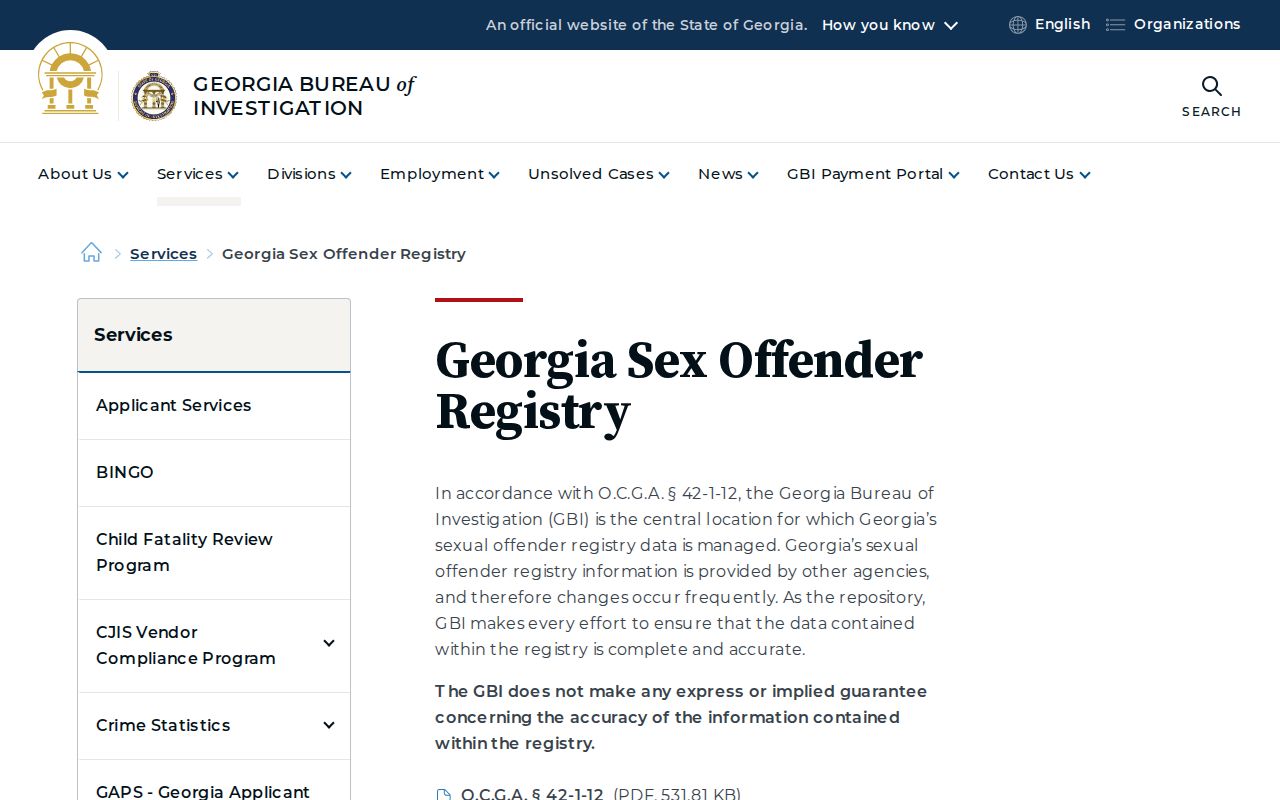
The state landing page is the right starting point because it also carries official cautions and registry information.
Lumpkin Registry No-Result Reasons
A no-result search does not prove that no registration duty exists. The GBI registry FAQ gives several explanations. The person may not be required to register, may have been removed by court order, may have a juvenile matter that is not publicly listed, may be registered in another state, or may not yet have completed the registration process. Spelling and incomplete location details can also narrow a search too far.
Try a careful name variation, then use the national system if another state may be involved. If a new Lumpkin County registration seems absent, allow for submission and update time. Report a safety or compliance concern to law enforcement rather than treating the screen result as a final legal conclusion.
Inside a Lumpkin Registry Profile
A public profile helps a reader distinguish one person from another and understand the registration basis. It can show identity and physical details, the registered address data supplied to authorities, the qualifying offense, and a registration or classification status. Fields should be read together. A shared name alone is not enough to identify a person.
| Name and aliases | Public identity names associated with the registration record. |
|---|---|
| Photo and description | A photograph and available physical identifiers used to reduce mistaken identity. |
| Registered address | Residence and other address information made public under Georgia law. |
| Offense information | The offense and available conviction details that support the registration duty. |
| Classification | Georgia's risk classification when one has been assigned. |
| Status and dates | Registration, verification, or compliance information available in the profile. |
The official FAQ pictured here explains the limits behind those fields.
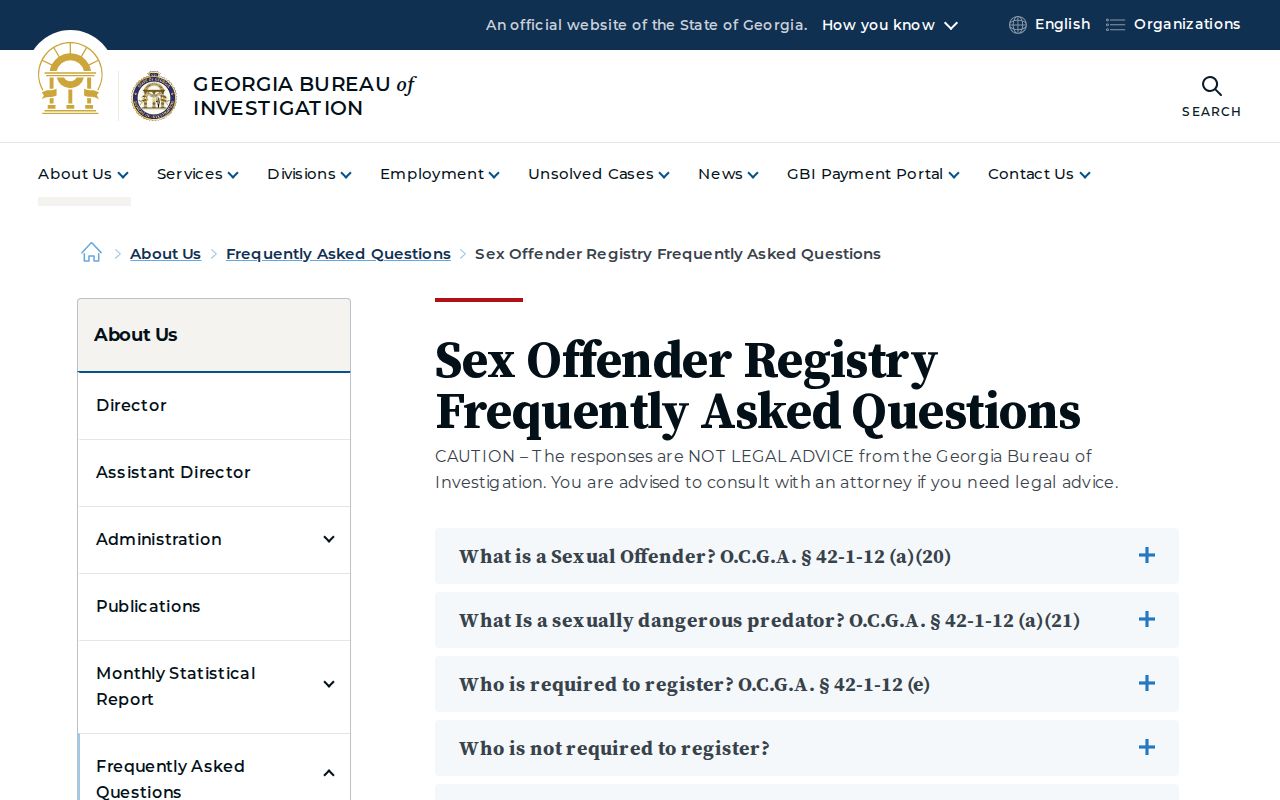
Those limits are why the date and source of each field matter as much as the result itself.
Lumpkin Offender Verification Duties
Georgia registration is not a one-time filing. Registrants generally must report annually within a set period around their birthday, and some changes trigger a much faster duty. The statute uses 72-hour deadlines for specified changes, including key residence, work, school, and identifying information. The sheriff receives those local reports and sends changes onward for the state record.
A delay can create a brief gap between an event and the public display. That is one reason GBI describes the registry as changing daily. It is also why a reader should not infer that an old address proves a current violation. Lumpkin County law enforcement can check the underlying report and timing.
Note: Public display can lag behind a properly submitted local change while agencies process and transmit the update.
Georgia Registration Levels and Requirements
Georgia uses state classifications, not the federal SORNA tier labels sometimes seen in national summaries. The Sex Offender Registration Review Board can classify a person as Level I, Level II, or a Sexually Dangerous Predator under O.C.G.A. §42-1-14. Those labels describe risk assessment. They should not be treated as three simple registration terms because Georgia generally imposes lifetime registration unless a court grants relief under a narrow statute.
| Georgia classification | Public meaning | Registration duration |
|---|---|---|
| Level I | Low risk of sexual offense recidivism under the state assessment | Generally lifetime, subject to lawful court relief |
| Level II | Intermediate risk under the state assessment | Generally lifetime, subject to lawful court relief |
| Sexually Dangerous Predator | Highest state designation with added statutory requirements | Generally lifetime, subject to applicable law |
Removal is not automatic when time passes. O.C.G.A. §42-1-19 provides a limited petition route for some people who meet its conditions. A denied petition generally cannot be filed again for two years. The court record, not a reader's guess based on age or offense date, controls whether relief was granted.
Juvenile cases need the same care. GBI explains that juvenile matters usually do not create a public registry listing unless the governing law and adjudication bring the person within a registration rule. A missing juvenile entry should not be described as a database error. Public visibility turns on the legal basis for registration, not merely on whether an allegation once existed.
Lumpkin and National Registry Searches
The Georgia registry is best for a Georgia-focused question. The Dru Sjodin National Sex Offender Public Website searches public registry data across participating jurisdictions. It is useful when a person may have moved across a state line or when a safety check concerns more than Lumpkin County.
The two systems are layers, not competing verdicts. Georgia remains the source for its own record and local authorities remain the route for a Lumpkin County compliance concern. NSOPW helps broaden the search but depends on the data each jurisdiction makes available.
Search scope matters when a record seems to vanish at a border. A Lumpkin County address search may not surface a person whose registered residence is in another Georgia county, even if that person works or studies nearby. A name search can broaden the state inquiry, while NSOPW can test participating registries outside Georgia. Compare identifiers before drawing a conclusion. Similar names, old addresses, and a recent move can all produce misleading first impressions.
The national search interface shown here provides the cross-state layer.
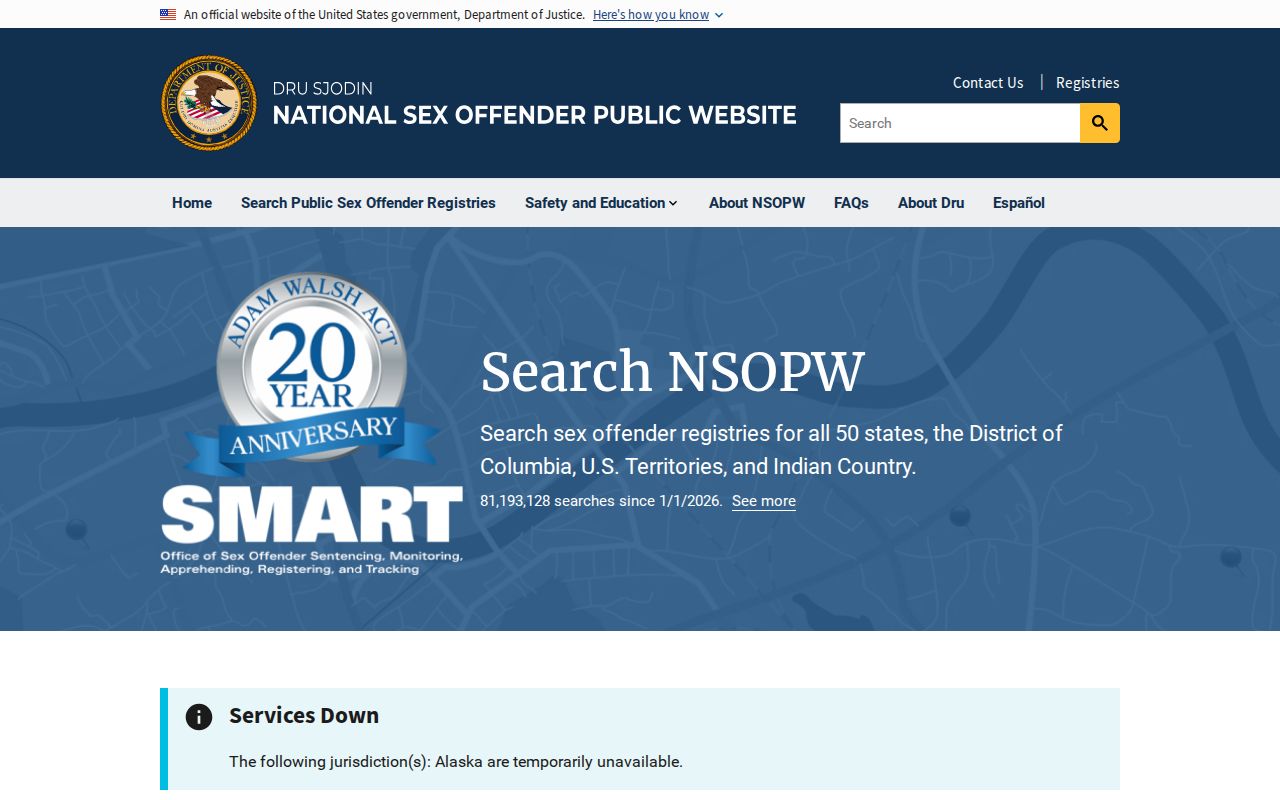
Use it after the Georgia search when residence history or location is uncertain.
Report Lumpkin Registry Noncompliance
If an address or status appears wrong, save the official profile details and contact the Lumpkin County Sheriff's Office. The office is at 385 East Main Street, Dahlonega, Georgia 30533, and the main line is 706-864-0414. Describe the public fact that prompted concern. Do not investigate at a residence, publish an accusation, or confront a registrant.
For an immediate threat, use emergency services. Routine questions should go through the sheriff or GBI. Law enforcement can compare a report with registration deadlines, submitted forms, and facts that are not shown on the public screen.
Community Notification and Lawful Use
Registry information supports awareness and practical safety planning. It can help a family understand nearby public records or verify an address shown in an official notice. It does not authorize harassment, threats, intimidation, or vigilantism. Readers should also avoid spreading an unverified match based only on a common name.
Use registry data lawfully: O.C.G.A. §42-1-12 makes misuse of registry information to commit a criminal act against a registrant a crime. Never threaten, harass, or intimidate a listed person or household.
The safest course is simple. Use the official profile, check its update details, and send a suspected violation to the agency with authority to investigate. Public access does not turn the reader into an enforcement officer.